Loading…
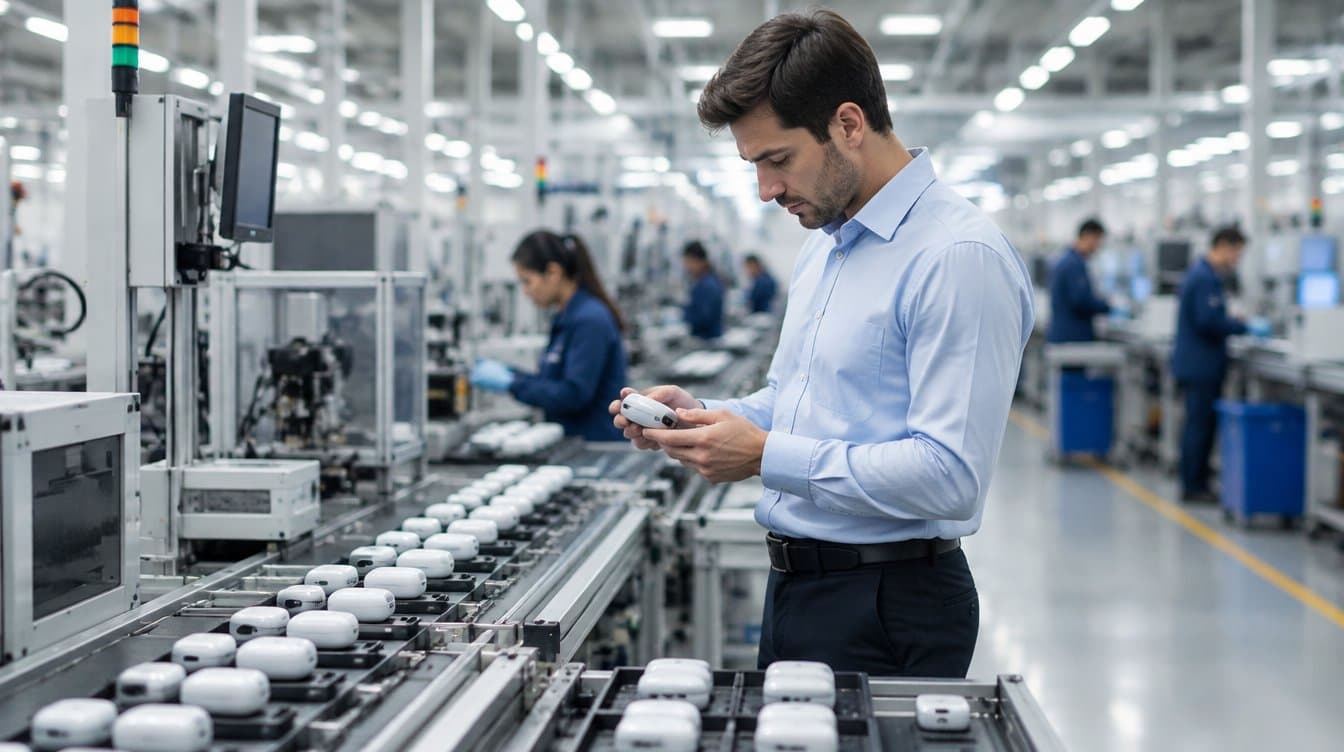
Manufacturing is the stage that separates inventors from product companies. It is also the stage with the highest tuition for mistakes: wrong factory, wrong tooling decisions, or missing quality control can each cost five figures and a year of momentum.
This pillar guide covers the whole manufacturing journey for an inventor bringing a first product to market — where to make it, how to find and vet the factory, what everything costs, how to keep quality under control, and how to get finished goods from the production line to your warehouse. It draws directly on ILG's own manufacturing track record: 16+ products taken from concept to store shelves through factory relationships in the US and China, supported by our Shanghai office. Where a topic deserves a deeper dive, we link the dedicated guide.
Before any factory sees your product, make sure it is designed to be made. Design for manufacturing (DFM) is the discipline of adjusting a design so it is cheaper and more reliable to produce:
A DFM pass by a competent engineer routinely cuts unit cost 15–30% and prevents tooling rework. If your design came straight from a patent drawing or an industrial designer who has never released a product to production, get a DFM review first. It is built into every ILG manufacturing engagement, and our product development guide explains how design and manufacturability connect.
The country decision shapes everything downstream: cost, speed, communication, minimums, and risk.
China remains the default for labor-intensive consumer products at volume. Deep supplier ecosystems mean nearly any part, finish, or packaging option is available within a short drive of your factory, and unit costs are hard to beat above a few thousand units. The trade-offs are longer lead times, freight and tariff exposure, time-zone communication, and a quality process you must actively manage.
The United States wins when runs are small, the product is heavy or bulky relative to its value, regulations are demanding, speed matters, or "Made in USA" carries real weight with your buyers. Automation keeps closing the labor-cost gap for many product types.
Other options — Vietnam, India, Mexico, Taiwan — each have strong niches, and Mexico in particular offers near-shore logistics for North American sales.
The honest answer is arithmetic: compare full landed cost (unit price + tooling amortization + freight + duties + inspection + the cash cost of inventory sitting on the water) and weigh it against speed and risk. Our US vs. China manufacturing comparison runs that math in detail.
Good factories rarely find you; you have to run a search:
Build a list of 8–12 candidates before contacting anyone; the process of quoting will eliminate most of them. Our guide to manufacturing sourcing covers the search step by step.
Treat factory selection like hiring a business partner, because that is what it is. The vetting sequence that works:
The full playbook, including the red flags that predict bad outcomes, is in how to find reliable manufacturers. And if you produce in China, working with Chinese factories covers the communication and relationship practices that separate smooth projects from horror stories.
For molded, stamped, or die-cast products, tooling is usually the biggest single check you write:
Three rules protect you. First, you own the tooling — it is in the contract, paid for by you, marked with your name, and the factory acknowledges it holds the tool for your exclusive use. Second, get the DFM conversation done before steel is cut, because changes afterward are expensive. Third, know the tool's rated life (shots) so you can plan replacement into your long-term costs.
Unit price is only the visible part. Landed cost — what a sellable unit actually costs in your warehouse — includes the part, packaging, inbound freight, duties and tariffs, inspection fees, defect allowances, and payment costs. A $3.00 part can easily be a $4.50 landed unit.
Margins have to survive the chain: if you sell through distributors into retail, your landed cost typically needs to be 15–25% of the shelf price. The complete manufacturing costs breakdown itemizes every layer with realistic ranges, including the costs first-timers always forget.
Quality is not an inspection at the end; it is a process you set up before production starts:
Overseas production makes this non-negotiable. The full system — including how AQL sampling works and what to do when an inspection fails — is in quality control when manufacturing overseas.
Your patent is one layer of protection; the working relationship is another:
For the legal architecture of your broader portfolio, see the IP strategy guide.
The last mile of manufacturing is getting goods moved, cleared, and stored:
Everything above is learnable. The question is whether your first product should pay the tuition. A manufacturing partner with existing factory relationships shortcuts the search, the vetting, the pricing leverage, and the QC infrastructure — and typically saves more than it costs on tooling and unit price alone.
That is the core of what ILG does. We have manufactured products across kids' accessories, ergonomics, housewares, and outdoor categories, with the Comfi II and Wow Pen Joy II ergonomic mice alone spanning fifteen years of continuous production through the same trusted factories. If you have a product ready for manufacturing — or a quote in hand you want a second opinion on — schedule a consultation and we will walk through it with you.
For a typical molded consumer product: $5,000–$50,000+ for tooling, then a per-unit cost that usually lands between 15% and 25% of the retail price once you include the part, packaging, freight, and duties. A product retailing at $25 generally needs a landed cost under $6–$7 to survive retail margins. Electronics, certifications, and low order volumes push costs up.
Chinese factories commonly quote MOQs of 1,000–5,000 units for consumer goods; domestic manufacturers are often flexible down to a few hundred. MOQs are negotiable — factories will usually run smaller first orders at a higher unit price, especially if you show a credible growth plan.
China generally wins on unit cost for labor-intensive, high-volume products; the US wins on speed, communication, smaller runs, IP comfort, and 'Made in USA' positioning. Freight, tariffs, and inventory risk narrow the gap more than most inventors expect. Run the full landed-cost comparison for your specific product before deciding.
Use an NNN agreement (non-disclosure, non-use, non-circumvention) enforceable in the factory's jurisdiction, file patent protection in the country of manufacture, keep the tooling in your name with your identifiers on it, and split sensitive processes across suppliers when practical. Relationship and incentives protect you as much as paper: a factory earning good ongoing business has little reason to burn you.
No, but the first project is far safer with experienced help. A good sourcing partner earns their fee through better factory selection, real quality control, and pricing leverage. If you go alone, budget extra time for vetting, insist on third-party inspections, and start with a small run you can afford to lose.
Talk through your situation with our team — no cost, no obligation.
Our team is happy to talk through your situation and explore your options.